
Speed and slippage around a release

This is the lesson people wish they had read before their first big number. Everything you have learned about the chain happens in seconds, and the market charges you for those seconds.
What happens to the book in the seconds around a release
In the minute before a scheduled release, the firms quoting prices know they are about to be wrong about something. Their answer is simple: quote wider, or stop quoting. Part One described liquidity, and Module 9 showed you what thin liquidity looks like when it happens. A release is that state on purpose.

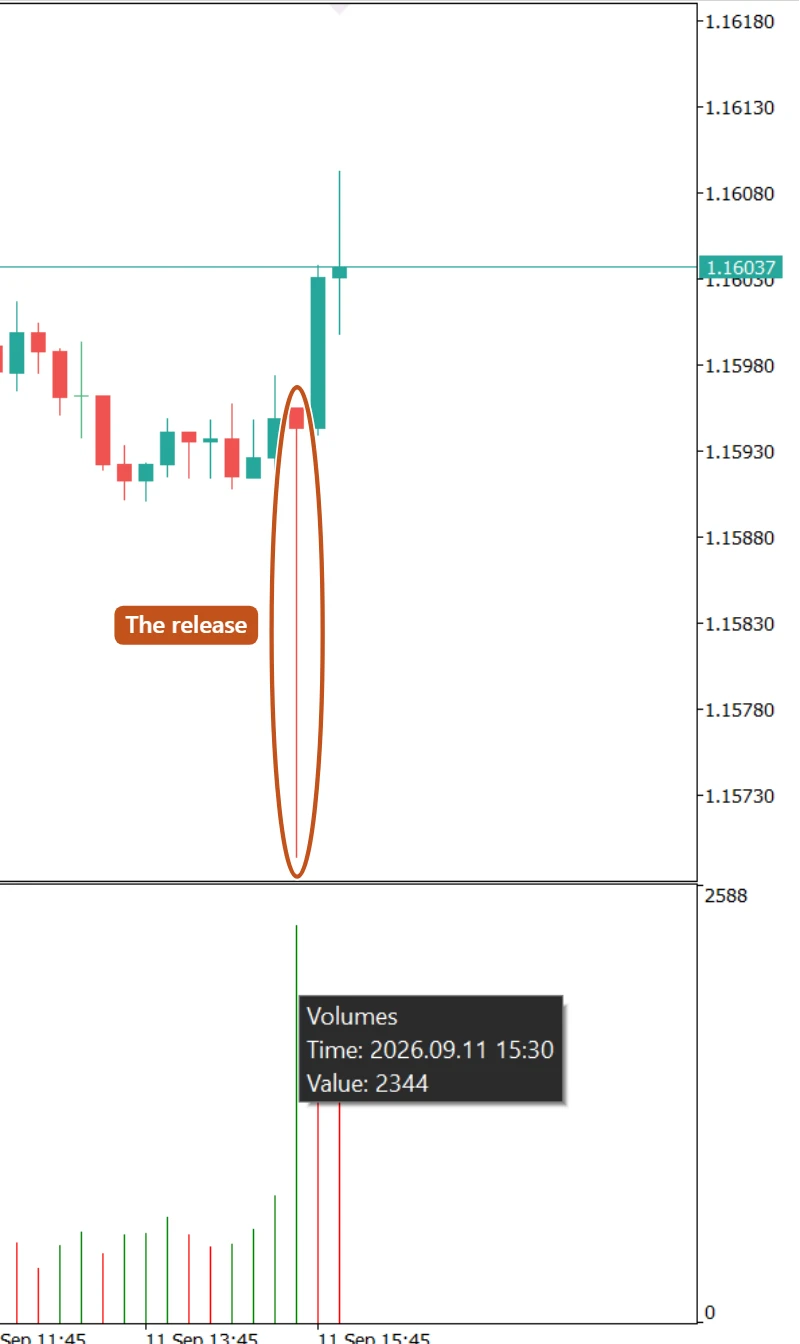
The seconds around a scheduled release are some of the most expensive on the clock. The spread widens, the depth behind it thins, and your order pays for both at once. Traders have lost far more than they planned to on a position that was, on paper, sized correctly.
Three things change at once
| What changes | What it does to your order | How long it lasts |
|---|---|---|
| The spread widens | Anything opened or closed in that window costs more, and an open position looks worse before price has moved at all | Usually minutes, sometimes longer on a thin pair |
| Depth thins | The same order size pushes price further, because less is resting at each level | Until the quoting firms come back |
| Execution slows | Requotes, rejected orders, and fills at prices you did not ask for | Worst in the first few seconds |
A major pair costing around 1 pip in a calm London hour can cost several times that for a short window around a big release, and a thinner pair widens further still. The calm spread was only ever the price of that moment.
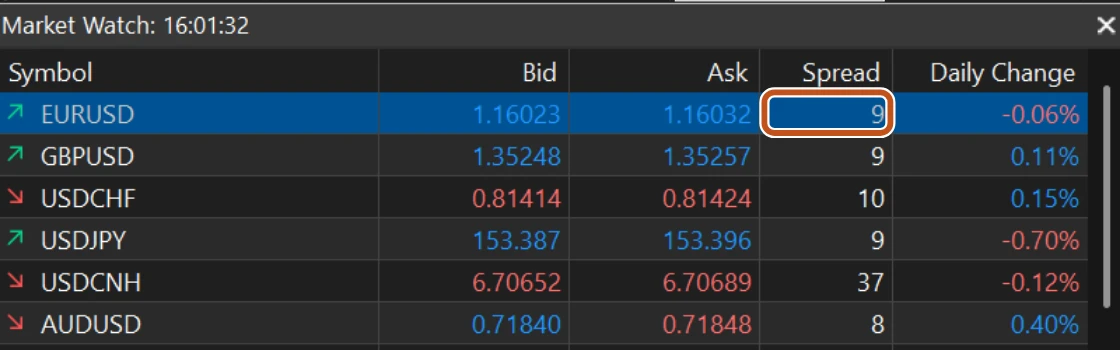
You can watch the first of these on your own screen. Right-click inside Market Watch and tick Spread to add a column, in points, for every symbol.
Why a stop can fill far from where you put it
Module 9 made the point plainly: a stop order is a hidden market order. It is not a promise about price. It is an instruction that says, when price touches this level, take me out at whatever is available.
In a thin book, whatever is available can be a long way from where you put it. That distance is slippage, covered in Part One as slippage and execution, and a release is where it does its heaviest work.
The stop that cost more than the rule allowed
- Account NGN500,000. Risk set at 1 percent, so NGN5,000 planned on this trade.
- The stop sits 20 pips from entry, so the position is sized at NGN250 per pip.
- The trade is open across a scheduled release. The number misses badly and price runs through the stop level in a single move.
- The stop triggers at the level set and fills 12 pips beyond it, because that was the first price with enough resting orders to fill the whole position.
The loss is 32 pips, not 20. NGN8,000 instead of NGN5,000, which is 1.6 percent of the account instead of 1 percent. The rule was followed correctly and the outcome still broke it.
Trading carries risk and you can lose money.
What is actually in your control
- Check the calendar for both currencies in the pair before you open a trade, not after.
- If a position will be open across a release, size it for the release rather than for the quiet hour. The same stop distance carries a wider real cost.
- Treat a normal stop as a request, not a guarantee. Some brokers sell a guaranteed stop on some instruments, always at a price, and the conditions are worth reading first.
- Decide before the minute arrives whether you are willing to hold through the event at all. Deciding while the candle is printing is not deciding.
None of this makes a release safe. It makes the cost of one visible in advance, which is a different and more useful thing.
The picture to keep
The room re-rating Ade takes a second. Getting a word in while it happens costs you far more than getting a word in the day before, or the day after.