
Testing a bot yourself

Whatever the seller answered, this part is yours. You drive it before you buy it, on your own broker, on your own terminal, with nothing at stake. It takes weeks, and the weeks are the point.
Before the tester: read the inputs
Open the program's Inputs tab in MetaTrader before you run anything, and find three things. Where is the stop loss set? How is trade size decided? And is there any input whose name suggests adding to a position, such as a multiplier, a grid step or a maximum number of trades?
Those three answers usually tell you more than the whole sales page, and they take a minute. If a stop loss input does not exist at all, you have finished the evaluation.
The sequence
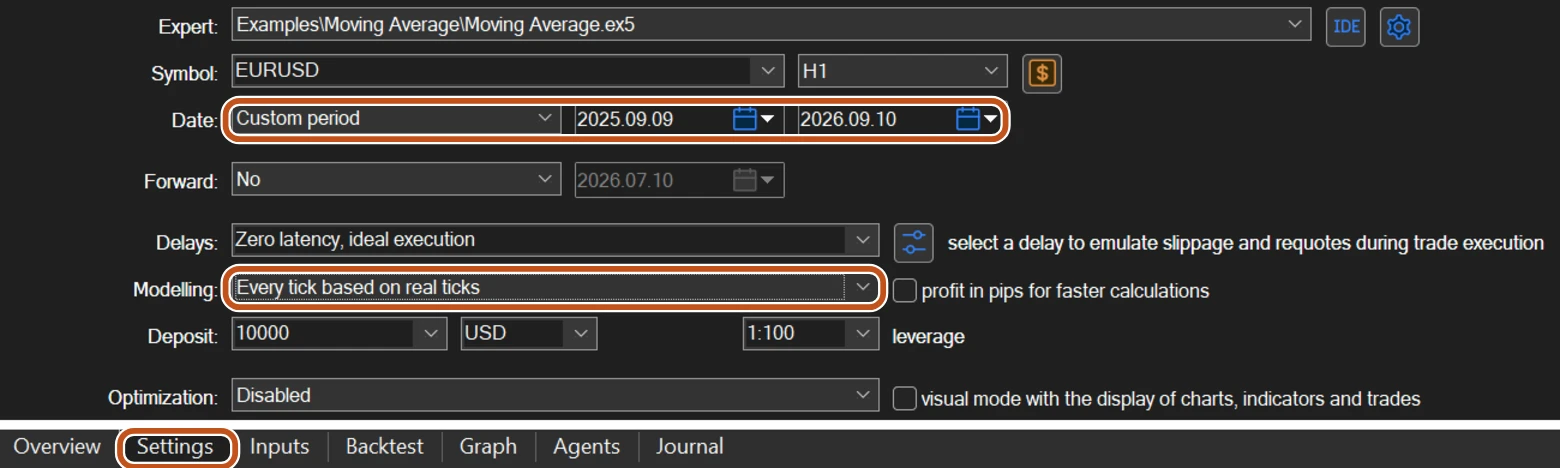
- Backtest on your own broker. Open the Strategy Tester, choose the program, then your broker's exact symbol string, and set Modelling to Every tick based on real ticks. Anything less models the gaps in your favour.
- Choose a period with weather in it. Cover at least two years, and make sure one of them contains a fast market and a long quiet range, not only a trend that suited the strategy.
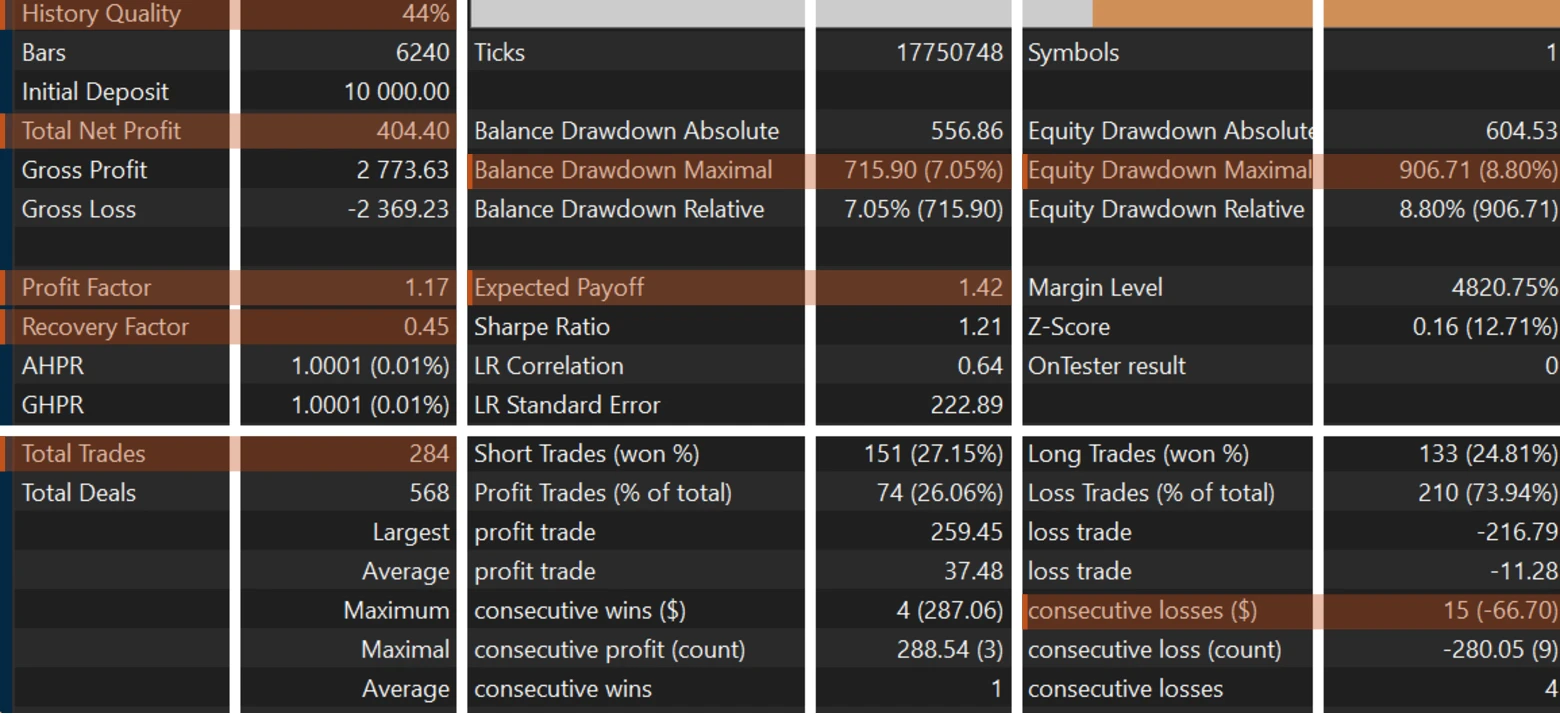
- Read the report in a fixed order. Total Trades first, then Equity Drawdown Maximal, then Maximum consecutive losses, then the largest losing trade. Read Total Net Profit last, on purpose.
- Open the trade list and sort by volume. Sizes that climb after losses tell you what lesson five described, whatever the seller called it.
- Run it again on a different year. If the result falls apart, the settings were fitted to the first year. Module 18 covered that in over fitting explained.
- Forward test on demo at your broker, for several weeks, and make sure the period includes a scheduled release, a weekend, and a restart of the terminal that you cause yourself.
- Then live, at the smallest size the broker allows, with your own daily limit in place, for a period you set in advance.
- Write the switch-off conditions before you start, because you will not write them fairly once money is moving.
Trading carries risk and you can lose money.
What the tester still cannot tell you
A backtest is an argument, not a result. It never sees your real fills, the spread at the moment of a release, the commission your account actually pays, or a night when the connection drops. Part One set out why in why backtests and demos mislead, and none of it changes because a program is doing the clicking.
| Stage | The question it answers | What it cannot know |
|---|---|---|
| Backtest on real ticks | Would these rules have survived past prices, and how often do they trade at all? | Your fills, your costs, and anything at all about next month. |
| Forward test on demo | Does it behave in real time the way the report said, including after a restart? | How the broker fills real money, and how you behave when it is yours. |
| Live at minimum size | Do the costs, the fills and your own nerve match what you were shown? | The long run. This is where your evidence starts, not where it ends. |

A program that has only ever been tested by the person selling it has not been tested. Run it yourself, on your own broker, with nothing at stake, for long enough to be bored by it. Boredom is the correct feeling at this stage.
The picture to keep
You drive the car yourself, on your own road, in the rain, before any money changes hands. A test drive around the seller's street proves only that the street is flat.